"Homebuyers must have the ability to make informed financial decisions and be given a clear picture of needed repairs or safety issues that could arise," Massachusetts Housing Secretary Ed Augustus said when the state's new inspection rule took effect last October.
He was right, and the rule does exactly that. Since October 15, 2025, Massachusetts sellers and their agents can no longer condition an accepted offer on a buyer waiving a home inspection, and they can't accept an offer if they know the buyer plans to skip one. A signed disclosure form now has to change hands before the first written contract. For most of the state, that closes the loop. A buyer walks into closing knowing the roof, the furnace, and the foundation the way a licensed inspector saw them.
In Newburyport's historic district, it closes the wrong loop. The regulation, 760 CMR 74.00, governs what a home inspector is allowed to skip. It says nothing about what a previous owner was allowed to change on the outside of the house without telling the city, and on High Street, Fruit Street, or in the South End, that gap is where the real risk sits.
What the New Law Actually Covers
The mechanics are straightforward. A seller has to deliver the Massachusetts Mandatory Residential Home Inspection Disclosure at or before the first Offer to Purchase, both parties sign it, and from that point a buyer can still choose to waive an inspection but only after the offer is accepted and only if that choice wasn't suggested or encouraged by the seller's side. Contract language that makes an inspection functionally impossible, a 24-hour scheduling window, for instance, or terms that block a buyer from walking away after a bad report, is now prohibited outright. New construction sold under a one-year warranty is exempt, as are sales between family members and certain estate transfers.
None of this touches exterior modification history. A home inspector's job is to evaluate the condition of systems and structure as they exist today. Nobody on that inspection is checking whether the windows replaced five years ago, the re-shingled dormer, or the rear addition ever went through the city's review process. That question lives in a completely different file, and it's the one that determines what you're actually allowed to do with the house once you own it.
The File a Home Inspector Never Opens
Newburyport's historic district isn't decorative. Any exterior change inside the district, window replacement, roofing, facade repainting, additions, demolition, can require review by the Newburyport Historical Commission, the city's volunteer board that evaluates proposals against the Secretary of the Interior's Standards for Rehabilitation. The commission also administers the city's Demolition Delay Ordinance, and within the Demolition Control Overlay District, a specific threshold matters: if a structure is listed as "Contributing" in the city's historic data sheets, exterior wall demolition beyond 25% triggers Zoning Board of Appeals review, even for changes that would otherwise sail through as routine renovation.
The district isn't one uniform zone either. It's stitched together from named sub-districts with their own character and, in the case of Fruit Street, its own local ordinance adopted by City Council in 2007, layered on top of the broader National Register district that also includes the Chestnut Street Victorian Residential District, the High Street Historic District, the Joppa Historic District, the Merrimac Street Shipbuilding District, the Ocean Mills Historic District, the Pleasant Street Industrial District, the South End Historic District, and the Washington Street Historic District. A buyer touring three houses on three different streets can be looking at three different review histories without any way to tell from the curb.
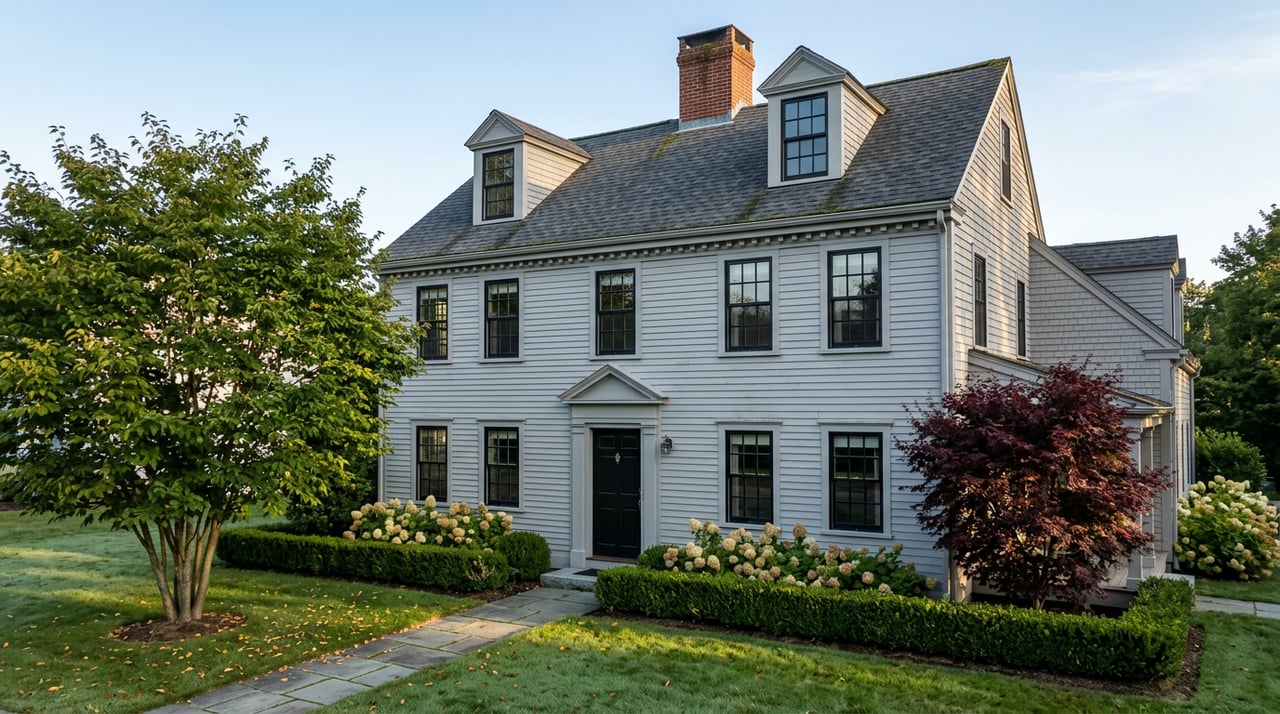
Here's the scenario that makes this concrete. A buyer closes on a Federal-era house on High Street under the new law's full protection: a clean inspection, a signed disclosure, no pressure to waive anything. Eighteen months later they want to replace a side door with a slider, and in pulling permits discover the previous owner replaced the dormer windows a decade ago without commission review. Under the demolition delay framework, unpermitted alterations can put the property's contributing status at risk and expose the new owner to the cost of undoing work they never did.
Two Clocks Running at Different Speeds
The inspection clock and the historic-review clock don't run on the same schedule, and that mismatch is the actual friction. A buyer under the new state law typically has a defined window, often measured in days, to schedule an inspection and decide whether to move forward. Confirming a property's permit history with the Historical Commission, understanding whether prior work was reviewed, and gauging how the commission is likely to treat future changes takes longer than that window allows if you start after the offer is accepted.
That's the reframe worth sitting with. The new law was built to protect buyers from a seller pressuring them into skipping an inspection. It says nothing about a buyer discovering, well after closing, that the house's exterior history was never reviewed at all. For most Massachusetts housing stock that's a minor gap. For a city where entire streets are inventoried as contributing structures, it's the gap that actually costs money.
What This Means If You're Bidding on a Historic Newburyport House
A few things change the calculus once you know where the real exposure sits:
- A standard home inspection is still the floor, not the ceiling. For a historic property, budget for a structural assessment that also flags evidence of prior unpermitted work, moisture intrusion around window replacements, or additions that don't match the original footprint.
- Contact the Historical Commission before you finalize an offer if you already know you want to make exterior changes. The commission evaluates proposals against the house's original architectural period, so a Federal-era property and a Victorian one are held to different standards, and knowing which one you're buying shapes your renovation timeline before you own it.
- Massachusetts does offer a Historic Rehabilitation Tax Credit worth up to 20% of qualified rehabilitation costs, but it applies to income-producing property, not an owner-occupied primary residence. If you're buying a High Street mansion to live in, that credit isn't available to you unless part of the property later shifts to income-producing use.
- Ask directly whether any exterior work has occurred since the house was last surveyed for the district's data sheets. Those records, along with historic maps and photo documentation, are held at the Newburyport Public Library Archival Center and through the Newburyport Preservation Trust, and they're the closest thing to a permit history a buyer can check before closing.
None of this is a reason to avoid a historic Newburyport house. It's a reason to run two due-diligence tracks at once instead of assuming the state's new disclosure form covers the ground it doesn't.
Frequently Asked Questions
Does the new Massachusetts inspection law apply differently to historic homes? No. The disclosure and waiver rules under 760 CMR 74.00 apply the same way to a 1790s Federal on High Street as they do to a 1990s colonial in any other part of the state. What differs is what a standard inspection doesn't check, which is exterior modification history and whether it was reviewed by the city.
Can I still waive an inspection on a historic property if I want to move fast? You can, but only after your offer is accepted and only if that decision is genuinely yours, not suggested by the seller or their agent. Given how much exterior-history risk sits outside what an inspection covers on a historic property, waiving it removes your one chance to catch condition issues before the historic-review question even comes into play.
What happens if I find unpermitted work after I've already closed? You inherit it. The Historical Commission's demolition delay and review authority attaches to the property, not the person who did the work. That can mean fines or a requirement to bring the alteration into compliance, which is a cost worth pricing in during negotiation rather than discovering afterward.
Buying in Newburyport's historic district rewards buyers who know which questions to ask before they write an offer, not just which box to check after. If you're weighing a Federal-era property, a South End cottage, or anything inside the district lines, Kevin Fruh has spent two decades on this market's development side and can walk you through the permit history, the commission's likely read on your plans, and what a specialized inspection should actually cover before you're under contract. Reach out before you bid, not after you've closed.