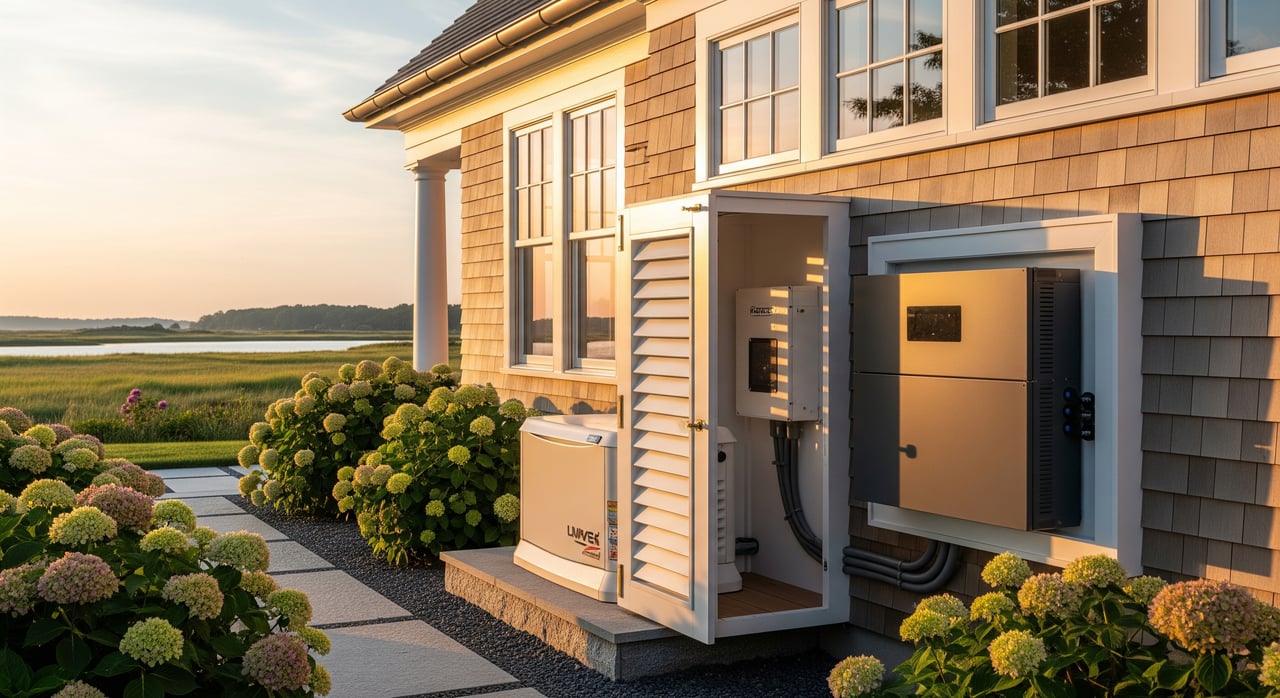
Storms on the North Shore can flip your week in a heartbeat. If you live in Newbury or along Plum Island, you know how fast wind, ice, and salt air can turn into days without power. Choosing the right backup system is about more than convenience. It is about protecting your home, comfort, and investment when the weather turns. In this guide, you will learn how generators and batteries compare in our coastal climate so you can pick the option that fits your home and lifestyle. Let’s dive in.
Newbury’s outage reality
Newbury faces nor’easters, tropical remnants, and winter storms that can knock down trees and power lines. Outages often last 1 to 3 days, and severe damage can stretch downtime to a week or more. Low-lying areas near the Merrimack River mouth and Plum Island also face coastal flooding and storm surge. If your property is in a flood-prone zone, ground-level equipment and basements can be at risk during major storms.
You can sometimes prepare ahead of a forecasted storm by charging batteries or checking fuel. Sudden wind events are harder to plan around. After a storm, narrow coastal roads and delivery delays can make refueling propane or diesel slower than usual. Your backup choice should factor in both storm behavior and local logistics.
Backup options at a glance
Standby generators
A standby generator is a stationary unit that starts automatically when the power goes out. It runs on natural gas, propane, or diesel and uses an automatic transfer switch to power selected circuits or your whole house. Common whole-house systems range from 16 to 22 kW, though larger homes or heavier loads can require 30 kW or more.
If you have natural gas, runtime can be effectively unlimited if service continues. With propane or diesel, runtime depends on your tank size and delivery access. Generators handle large loads well, including HVAC, well pumps, and electric ovens, when sized correctly.
Battery systems
Battery backup systems use lithium-ion storage paired with an inverter and energy management. A single module is often around 10 to 20 kWh, and you can stack multiple units for more capacity. Batteries can be AC-coupled at your panel or DC-coupled with solar.
Batteries are very quiet and seamless. They switch on instantly and are great for essential circuits like refrigeration, lights, Wi‑Fi, outlets, and a sump pump. To run heavy loads such as electric heating or an electric range for long, you would need multiple modules and a large inverter, which gets expensive.
Sizing for your home
Start by listing critical loads and the runtime you want. If you need true whole-house coverage, especially with electric heat, ranges, or large pumps, a generator often makes more sense. Natural gas capacity, propane tank size, and transfer switch selection all matter for a generator.
For batteries, think in kWh and inverter power rating. A single 13.5 kWh battery can handle essential loads for many hours but not heavy, continuous usage. To support an HVAC compressor or well pump, you need an inverter that can handle the startup surge. If heavy loads are nonnegotiable, expect to add battery modules.
Runtime and refueling
Generators can run as long as they have fuel. Natural gas systems depend on the gas utility. Propane and diesel depend on your on-site tank and the ability to restock after a storm. Delivery bottlenecks can occur if roads are blocked.
Batteries run on stored energy. Without on-site solar or a generator for recharging, a battery setup is typically a short-to-moderate outage solution. If paired with solar, you can extend uptime during daylight, though long, cloudy periods will limit recharge.
Noise and neighbors
Noise is a big factor in tight coastal neighborhoods. Many standby generators produce about 60 to 80 dB at around 7 to 10 feet, depending on the model. For context, 60 dB is similar to normal conversation, 70 dB is like a vacuum cleaner, and 80 dB is like busy traffic.
Battery systems are much quieter in operation, often around 35 to 55 dB from inverter fans or thermal controls. If you have close neighbors or strict HOA rules, batteries can be a better fit. If you choose a generator, consider acoustic enclosures and strategic placement.
Cold, emissions, and upkeep
Cold weather
Generators usually start reliably in winter with proper cold-weather kits. Diesel fuel needs treatment in extreme cold to prevent gelling. Lithium batteries lose capacity in the cold, so indoor placement or thermal management is important for performance.
Emissions
Generators produce combustion emissions. Diesel has the highest emissions, while natural gas and propane are cleaner but still combustion sources. Batteries have zero on-site combustion emissions. When paired with solar, they can recharge with minimal environmental impact.
Maintenance and life
Generators need regular service. Expect exercise runs, oil and filter changes, starter battery replacement, and periodic inspections. Many last 10 to 30 years with proper care. Batteries require less routine maintenance. Most come with a 10-year warranty or a set number of cycles, with typical life around 10 to 15 years depending on use.
Siting and permits in Newbury
Permits and codes
Most installations in Massachusetts need building and electrical permits. Gas piping for natural gas or propane typically requires a plumbing/gas permit. On-site fuel storage may also involve Fire Department notification and approvals. Your installer should follow the Massachusetts State Building Code, the National Electrical Code, and relevant NFPA standards. Always confirm exact requirements with the Newbury Building Department and the Newbury Fire Department.
Flood and elevation
If your home is in a flood-prone area, do not place equipment where it can be submerged. Use FEMA Flood Insurance Rate Maps to check your flood zone and Base Flood Elevation. Place outdoor equipment above Base Flood Elevation with appropriate freeboard. Anchor propane tanks to prevent floating during flood conditions.
Clearances and exhaust
Follow manufacturer clearances from doors, windows, vents, and air intakes. Keep exhaust pointed away from openings and maintain the required space from combustibles. Proper siting protects air quality and safety inside your home.
Utility interconnection
Automatic transfer switches must isolate your home from the grid during generator operation to protect line workers. Some battery and solar systems also require utility interconnection agreements and inspections. Contact your electric utility early to understand the process and timeline.
Noise rules and HOAs
Check Newbury bylaws for any noise or nuisance rules and confirm HOA requirements before you choose equipment and location. A quick review up front can prevent costly changes later.
Costs and incentives
Whole-house standby generators typically range from about 8,000 to 30,000 dollars or more installed, depending on size, fuel type, transfer equipment, and site work. Portable or partial-home setups can be 1,000 to 5,000 dollars. Complex sites, diesel systems, or flood-zone installs usually cost more.
A single residential battery module with inverter might run 8,000 to 20,000 dollars installed. Whole-home battery configurations can be 20,000 to 60,000 dollars or more, especially if you need multiple modules and a large inverter to handle heavy loads.
Ongoing costs differ. Generators require fuel, annual maintenance, and occasional repairs. Batteries have minimal routine maintenance, though capacity degrades over time and eventual replacement is expected.
Incentives and programs
Federal tax credits can apply to battery storage when installed with qualifying solar in some cases. Massachusetts has offered clean energy programs through state agencies and utilities, and some utilities run demand-response programs for batteries. These incentives change often. Consult your tax advisor and installer, and check current program details through Massachusetts energy agencies and your utility.
Which solution fits you
- If you want multi-day, whole-house power and have access to natural gas, a natural gas standby generator sized for your full load is often the most practical choice.
- If you value quiet operation and low on-site emissions and you mainly need essential circuits, a battery system is a strong fit. Adding solar extends daytime resilience.
- If long outages are possible and fuel deliveries are uncertain, consider a hybrid: battery plus solar with a smaller generator to recharge the battery as needed. This reduces generator runtime and noise while increasing autonomy.
- If your property is in a flood zone, a battery system in a conditioned, elevated location can be safer than outdoor tanks. If a generator is necessary, site it above flood elevation and secure tanks.
Homeowner checklist
- List the circuits and appliances you must power and how long you want them to run.
- Check FEMA flood maps and your Base Flood Elevation for siting decisions.
- Contact the Newbury Building Department and Newbury Fire Department for permits, fees, and inspections.
- Speak with your electric utility about interconnection requirements.
- Confirm natural gas availability or plan propane/diesel logistics and delivery.
- Get at least two licensed quotes. Ask for model sound ratings, clearances, corrosion protection, and tank anchoring details.
- Review warranties, expected battery cycle life, and recycling options at end of life.
- Call your insurance agent to confirm any requirements for on-site fuel storage.
- If you are in an HOA, obtain written approval for equipment and placement.
- Plan noise mitigation and neighbor communication if you choose a combustion generator.
A well-chosen backup system protects your comfort and your property value during Newbury’s toughest weather. As you plan your move or prepare a home for sale, the right solution also adds buyer confidence, especially for coastal and waterfront properties. If you want local, practical guidance on how backup power factors into buying or selling, reach out to our team for a tailored plan that fits your home and goals.
Ready to talk next steps for your property? Request Your Complimentary Home Valuation with Unknown Company to get expert, local guidance.
FAQs
How Newbury storms affect backup choices
- Coastal storms often cause 1 to 3 day outages and can delay fuel deliveries, so plan for runtime and access when choosing a system.
Generator or battery for long outages
- For extended outages, generators can run continuously with fuel. Batteries need recharging from the grid, solar, or a generator.
Running electric heat or ovens on batteries
- Most homes need multiple battery modules and a large inverter to run heavy loads for long periods, which can be costly.
Noise levels for home generators
- Many standby generators are about 60 to 80 dB at 7 to 10 feet; batteries are much quieter, typically 35 to 55 dB from fans.
Permits for backup power in Newbury
- Expect building and electrical permits, plus plumbing/gas for fuel lines and possible Fire Department approvals. Confirm with local departments.
Backup power in flood zones
- Place equipment above Base Flood Elevation, avoid basements, and anchor propane tanks to prevent floating during flood conditions.