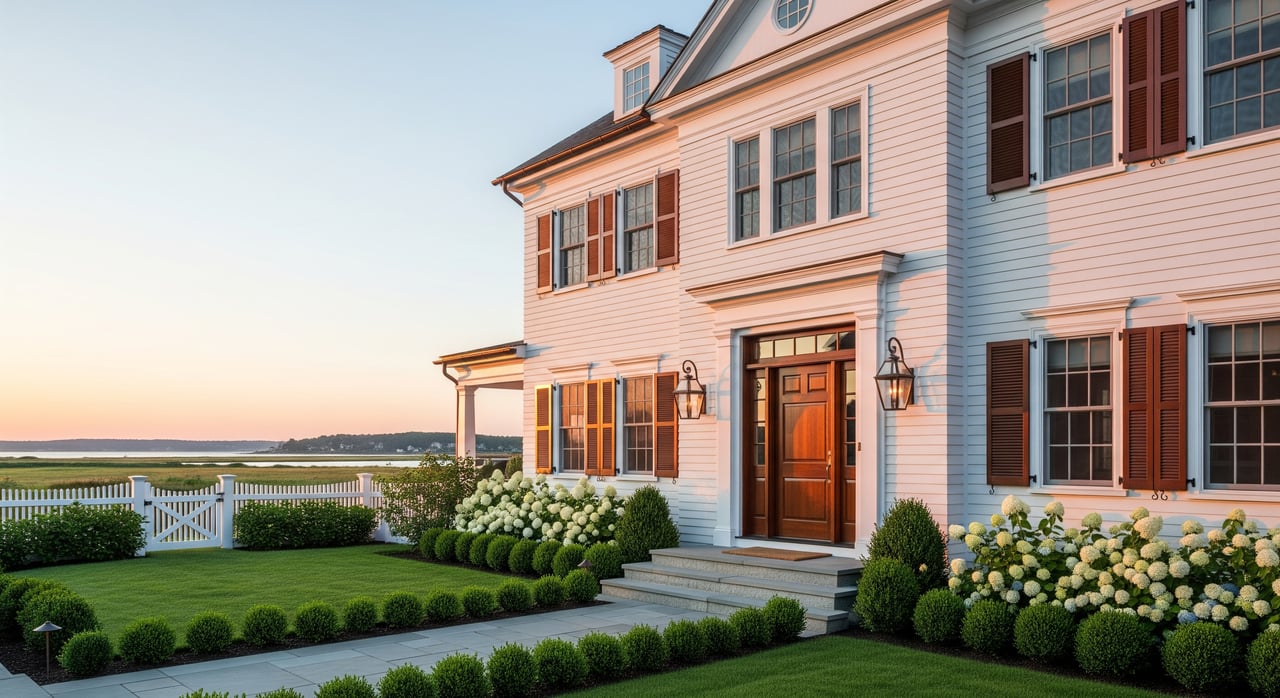
What if the trim, windows, and roofline on a house could tell you its story? In Newbury, they often do. With roots stretching back to the 1600s, the town holds a rich mix of Colonial farmhouses, refined Federal gems, Victorian showpieces, and early 20th-century favorites. In this guide, you’ll learn how to spot the most common historic styles in Newbury, what those features mean for value and maintenance, and what to consider if you plan to buy or sell. Let’s dive in.
Newbury’s historic backdrop
Newbury and nearby Essex County towns grew from maritime trade, salt-marsh agriculture, and small industry from the 17th through the 19th centuries. That long timeline created today’s mix of First Period, Georgian, Federal, Greek Revival, and later Victorian and early 1900s styles. Older homes often cluster along original roads, village centers, riverfronts, and near the marshes where settlement began.
Because of the coastal setting, flood risk and storm exposure are part of the context for many historic properties. If a home sits near the Plum Island River, Parker River, or the marsh, you should check current flood maps, elevation certificates, and insurance needs. Salt air and wind can also increase exterior maintenance.
Preservation is another layer to understand. Many Massachusetts towns maintain a Historical Commission and a local inventory of significant buildings. At the state level, the Massachusetts Historical Commission maintains MACRIS, a statewide database of documented properties. A home may also appear on the National Register of Historic Places, either on its own or within a district. Local rules vary by town, so always check whether a property sits in a local historic district or is subject to a demolition delay bylaw before planning exterior changes.
Bottom line for buyers and sellers: you will see wide variety in age, construction methods, and condition. Knowing the style helps you understand the home’s likely materials, mechanical upgrades to expect, and which original features support value.
Spotting the styles in Newbury
Use roof shape, symmetry, window patterns, and entry details as your quick ID toolkit. Here is what you are most likely to see.
First Period or early Colonial
- Era: late 1600s to early 1700s.
- Hallmarks: steep gable roof, large central chimney or paired gable-end chimneys, small multi-pane windows, timber-frame structure.
- Local notes: Surviving examples are rare and often altered. Look along the oldest roads and farmsteads.
Georgian
- Era: about 1700 to 1780.
- Hallmarks: strict symmetry, five-bay facade, paneled center door with transom and pilasters, side-gabled or hipped roof, multi-pane double-hung windows.
- Local notes: Common in prosperous 18th-century coastal towns and near historic centers.
Federal
- Era: about 1780 to 1830.
- Hallmarks: lighter, more refined look, low-pitched roof, taller narrow windows, fanlight or elliptical transom above the door, sidelights, decorative cornice.
- Local notes: Many Essex County merchant houses show Federal detailing after the Revolution.
Greek Revival
- Era: about 1825 to 1860.
- Hallmarks: gable-front orientation like a temple front, heavy cornices, wide banded trim, corner pilasters, columned entry porches, often painted white.
- Local notes: Found on 19th-century side streets and in farmhouses updated during the Greek Revival era.
Gothic Revival
- Era: about 1840 to 1870.
- Hallmarks: steep cross gables, pointed arches or decorative vergeboard, sometimes board-and-batten siding.
- Local notes: Less common, but visible in picturesque rural settings and some church architecture.
Italianate
- Era: about 1840 to 1885.
- Hallmarks: low-pitched or flat roofs, wide overhanging eaves with brackets, tall narrow windows with elaborate crowns, occasional cupola or tower.
- Local notes: Appears in mid-19th-century neighborhoods and on older houses that received Italianate facade updates.
Second Empire
- Era: about 1855 to 1885.
- Hallmarks: mansard roof with dormers, ornate cornices and brackets, strong vertical presence.
- Local notes: Often downtown or on prominent streets, built by merchants during the mid-19th century.
Queen Anne or Victorian
- Era: about 1880 to 1910.
- Hallmarks: asymmetry, wraparound porches, towers or turrets, varied textures like shingles and clapboards, spindlework and patterned details.
- Local notes: Common from late 19th-century suburban growth and in coastal neighborhoods.
Shingle Style
- Era: about 1880 to 1900.
- Hallmarks: continuous wood shingle skin over roof and walls, complex rooflines, broad porches integrated into the massing, informal flow.
- Local notes: Strong presence in New England coastal settings and larger seaside cottages.
Colonial Revival
- Era: about 1880 to 1955.
- Hallmarks: a respectful nod to earlier colonial motifs, symmetrical facades, classical door surrounds, columned porches, Palladian windows.
- Local notes: Very common for early to mid-20th-century building and for renovations of older homes.
Bungalow or Craftsman
- Era: about 1905 to 1930.
- Hallmarks: low-pitched roofs, wide eaves with exposed rafters, deep front porches with tapered columns, built-in cabinetry inside.
- Local notes: Found in early 20th-century neighborhoods and modest single-family streets.
Buying or selling a historic home: what to expect
Historic homes reward you with character and provenance. They also require careful due diligence. Use this section as a practical checklist.
Condition and inspection priorities
- Structure: Timber framing and old sill beams can show rot, settlement, moisture intrusion, or insect damage. A structural engineer may be wise if you see movement.
- Foundations: Fieldstone or brick requires checking for moisture, bulging, and repointing needs.
- Building envelope: Original clapboards or shingles and single-pane windows can be drafty and need maintenance. Re-siding or re-shingling may trigger review in certain districts.
- Mechanical systems: Electrical, plumbing, and heating are often a patchwork. Verify capacity, code compliance, and replacement timelines.
- Environmental hazards: Expect lead paint in homes built before 1978, possible asbestos in older materials, and the occasional old oil tank. Renovation in older homes must follow lead-safe practices.
- Septic and utilities: Many homes use Title 5 septic systems. Confirm capacity and condition, and check for municipal water or sewer where available.
- Flood and insurance: Coastal and riverside homes may lie in FEMA flood zones. Confirm the floodplain status, elevation certificates, and insurance options.
Rules, reviews, and approvals
- Historic designations: A National Register listing does not usually restrict private owners. Local historic districts, demolition-delay bylaws, or preservation easements can affect exterior changes.
- Local review: Many towns require a Certificate of Appropriateness or Historical Commission review for visible exterior work. Interior changes are usually less regulated unless covered by an easement.
- Title research: Easements or covenants that protect historic features sometimes appear in the deed. Your attorney and title team can verify these.
Smart renovation strategies
- Preserve original fabric: Repair over replace when feasible. If replacement is necessary, match profiles and materials to keep the historic look.
- Comfort and code: Plan HVAC, insulation, electrical, and plumbing upgrades to be as noninvasive as possible. Insulating walls in older homes requires methods that avoid trapping moisture.
- Windows: Weigh restoration and storm windows against high-cost replacement units designed to match historic profiles.
- Right professionals: Hire a home inspector comfortable with old houses, a contractor with historic experience, and a preservation architect for larger projects. Call a structural engineer for visible settling or rot.
Financing, incentives, and insurance
- Financing tools: Conventional mortgages and renovation products like FHA 203(k) can fit historic projects, depending on your goals and qualifications.
- Historic tax credits: The Federal Historic Rehabilitation Tax Credit typically offers 20 percent of qualified rehabilitation costs, but only for certified historic structures used for income-producing purposes.
- Energy upgrades: State energy-efficiency programs can help fund insulation, heating upgrades, and audits while you protect historic materials.
- Insurance: Older construction and coastal exposure can raise premiums. Wind and flood mitigation steps may be required.
Value and marketability
- Character as a differentiator: Well-documented provenance and intact period details can increase buyer interest. Architectural photos, measured drawings, and a concise provenance statement support marketing.
- Appraising the unique: Historic homes may need comparable sales of similar vintage and preservation status. Documented system upgrades and sensitive restorations help comps.
- Maintenance planning: Build a realistic plan for paint cycles, wood repairs, and roofing. Budget for capital work on older mechanicals.
Your Newbury action plan
- Confirm the build date and alterations on the assessor’s property card.
- Search statewide historic inventories to see if the home is documented and how it is described.
- Ask the Newbury Historical Commission about any local historic districts, demolition-delay bylaws, and review requirements.
- Check FEMA flood maps for flood zone status and insurance implications if the home is near the river or marsh.
- Review Title 5 septic records or schedule an inspection if the property is not on municipal sewer.
- If you plan a renovation, line up an inspector familiar with old houses, a preservation-focused architect, and a contractor with local historic experience.
If you want a tailored read on style, value, and the best way to position your home in today’s market, reach out to Kevin Fruh. Kevin’s team combines deep local expertise with boutique client care and global marketing to help you buy or sell with confidence.
FAQs
How do I identify a home’s style in Newbury?
- Start with roof shape, symmetry, window size and pane count, and the entry surround, then compare those features to the typical markers for Colonial, Georgian, Federal, Greek Revival, Victorian, and Craftsman-era homes.
Are there limits on renovating a historic home in Newbury?
- It depends on designation and location; National Register status alone usually does not restrict private owners, but local historic districts, demolition-delay bylaws, and preservation easements can require review for visible exterior changes.
Are there grants or tax credits for restoring a historic house in Massachusetts?
- The federal Historic Rehabilitation Tax Credit generally covers 20 percent of qualified costs for certified historic buildings used for income-producing purposes, and other state or local incentives vary by program and year.
What special inspections should I order for an older house in Essex County?
- Get a standard home inspection plus focused checks for structure and foundation, pest and termite activity, septic compliance under Title 5 if applicable, and environmental hazards like lead, asbestos, or old oil tanks.
How does coastal exposure affect a historic property in Newbury?
- Expect more wear from salt air and wind, higher likelihood of floodplain permitting and insurance needs, and the importance of checking FEMA flood maps and elevation certificates when near rivers, marshes, or the shoreline.
What maintenance budget is realistic for an antique home?
- Plan for exterior paint every 5 to 15 years depending on exposure, roof or shingle replacement every 20 to 50 years depending on material, and ongoing upgrades to older electrical, heating, and plumbing systems.